
Why Real Estate Is Still A Portfolio Decision, Not Just A Lifestyle One
Walking through Coronado, the rhythm can feel different depending on the time of year. Summers feel the busiest, while the shoulder seasons of spring and fall can often feel very quiet. On an evening stroll along Ocean Blvd, you may notice many of the lights are out on these premium properties. This begs the question: Why are so many homes seemingly left vacant for extended periods? One answer to this lies in the theme of this editorial, and it’s worth taking into consideration for your own sake, whether you own property here, are considering your next move, or an investment.
Real estate, especially in Coronado, is often looked at as a “lifestyle” choice. “I want to live near the beach because I love to hear the crash of the ocean”, for example. Schools, walkability, and views can all factor into this decision, too. However, this is often only half the story. The other half is that real estate is one of the few (the only?) assets that can function as a usable home, an investment you hold long term, or a financial tool, all at once.
Wealth planning outlets often put real estate in the backseat when it comes to long-term portfolio planning. However, real estate should be considered as a potential diversifier within a broader investment program because it can behave differently than equities or fixed income assets and offer possible tax advantages as well. This portfolio lens matters even more if you own property in more than one locale, because each market carries its own mix of liquidity, regulation, and risk.
One of the most advantageous features of real estate is the ability to leverage against it. With most investments, borrowing to buy presents margin risk and can be functionally complex. With real estate, leverage is built into the product: a mortgage allows you to own and control a larger asset with a smaller amount of cash. Used strategically, leverage can be used to amplify long-term gains, and it can also preserve cash for use elsewhere or simply kept for peace of mind (think a rainy-day fund). In this context, high net worth individuals often think less about “maximum loan approval” and more about asset resilience, or an investment’s ability to hold up under changing market conditions.
Then there’s the tax treatment, which is where real estate diverges from other lifestyle assets like boats or cars. If a property is held as a rental, even a vacation rental that can double as a 2nd home, the IRS generally allows owners to deduct expenses and to depreciate (a type of tax write-off) the building. This can have a meaningful impact as it may reduce the taxable rental income even if the property is generating positive cash flow.
Additionally, recent changes to the SALT (state and local tax) deduction cap add further consideration for households that itemize their tax deductions. The long-standing $10,000 limit was increased starting in 2025 to $40,000 (with phase-outs and caveats tied to income). This is especially relevant for people in high-tax states like California and for owners balancing property taxes across multiple homes and states, and can help shelter income from taxation.
At the end of the day, if you think about your investments as a coordinated effort, real estate deserves the same treatment. Not because it’s the “best asset” (although I am biased!) but because it’s so multi-purpose and the planning outcomes can vary widely depending on whether it’s for personal or part-time use, or if it’s strictly an investment. Coronado real estate and San Diego at large are an excellent option for those considering portfolio diversification into real estate because of their historically consistent positive appreciation and strong rental demand. So, the next time you pass a darkened home in Coronado, the better question may not be why it’s empty, but what role it plays in its owner’s larger financial picture and whether you should be considering a similar strategy for yourself.
*General information only, not tax, legal, or investment advice. A CPA and financial advisor can help apply these concepts to your specific situation.
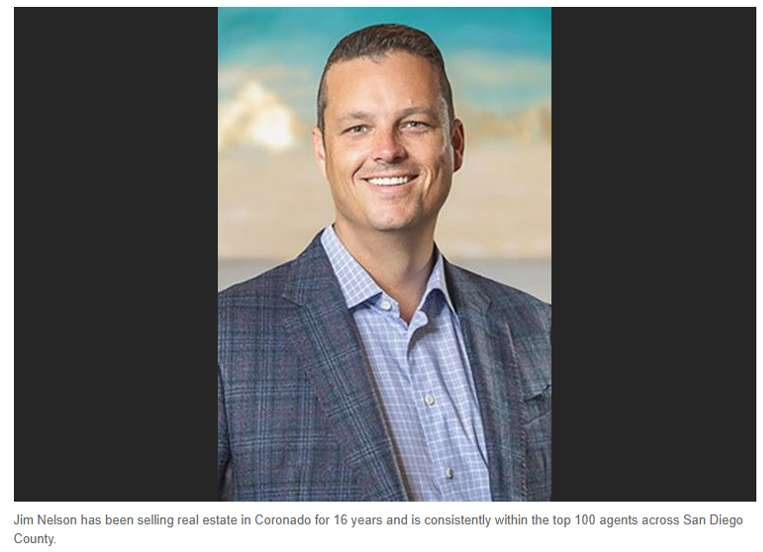
Jim Nelson has been selling real estate in Coronado for 16 years and is consistently ranked within the top 100 agents across San Diego County. Have a question about real estate? Submit them to jameshnelson@gmail.com and your question could be the subject of a future article.
Categories
Recent Posts





GET MORE INFORMATION
